Queen Anahita platform worldwide
Woven in Ink and silk : A Persian Journey of the Heart
How Persian Calligraphy, Carpet Art, Poetry, and Music Carry the Ancient Philosophy of Love and Compassion
John Williams
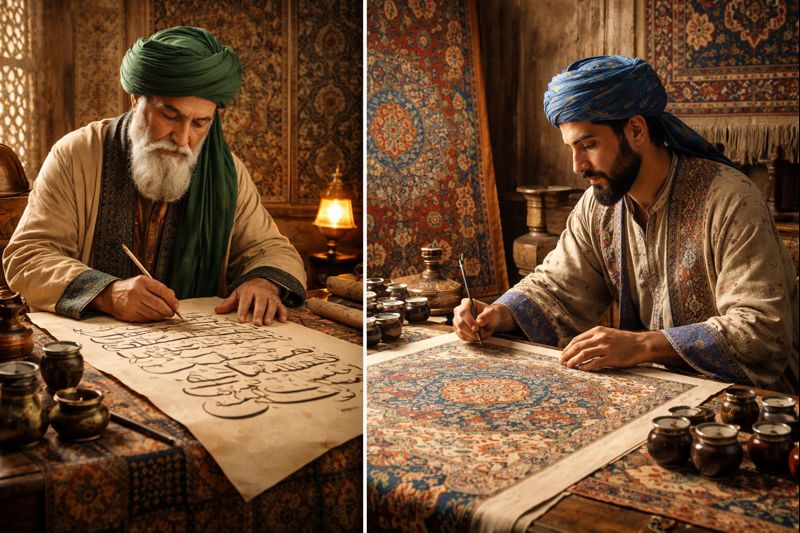
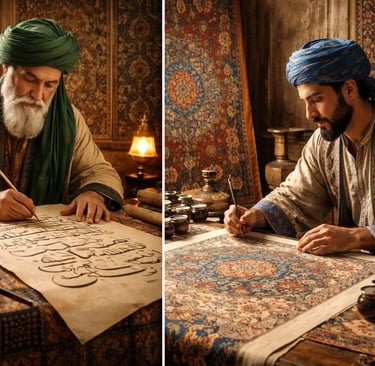
There is a quiet rhythm to my early years, shaped by ink, silk, and verse. During my school days and while growing up and adulthood, I attended calligraphy classes and Persian carpet internships—spaces where patience was a virtue and beauty was never rushed. In the slow curve of a Nastaʿlīq letter and the deliberate knot of a carpet loom, I encountered the same ancient lesson: art is a form of devotion.
Persian poets such as Hafez, Saʿdi, Rumi, and Ferdowsi became my unseen teachers. Their philosophy of love and compassion—mehr and eshq—is not abstract sentiment, but a moral architecture woven into Persian culture and offered generously to the world. Saʿdi’s reminder that humanity is “of one body” echoed in every pattern I studied and every line I practiced.
As I learned the language of calligraphy and the symbolic drawings within Persian carpets, I began to sense how deeply these arts are interwoven with ethics: loving one another, serving others, and honoring harmony. Persian music, with its ancient modes and soulful pauses, completed this tapestry. It carried the emotional fabric of ancient Persia—sorrow and joy entwined—teaching me that true art, like true culture, exists to soften the heart and awaken compassion.
Queen Anahita Gallery
© 2024. All rights reserved.